Jakob Roth · 15 September 2026
Tracing the Material Science Behind Specialized Aging Containers in Niche Beverage Production
Specialized aging containers play a central role in niche beverage production where material interactions determine chemical changes over months or years and researchers continue to map how wood polymers, metal alloys, and mineral composites influence oxygen transfer rates along with compound extraction. Data from multiple studies show that oak species such as Quercus alba and Quercus robur release varying levels of ellagitannins and lignin derivatives depending on growth region and seasoning methods while stainless steel and concrete options limit or permit controlled gas exchange without adding organic compounds.
Core Material Properties in Traditional Oak Systems
Oak barrels remain the benchmark because their cellular structure allows slow diffusion of oxygen at rates measured between 10 and 30 milligrams per liter per year according to tests conducted at several forestry research stations and the porosity created during coopering directly affects how furfural and vanillin develop during maturation. Different toast levels trigger distinct pyrolysis reactions that generate smoky phenols or sweet lactones and producers select these profiles based on target spirit categories like single malt whisky or small-batch rum. Studies at the University of California Davis documented how barrel size alters surface-to-volume ratios and smaller casks accelerate extraction cycles while larger formats extend contact time before peak flavor integration occurs.
Transition to Inert and Semi-Permeable Alternatives
Stainless steel tanks with internal oak staves or wood chips emerged as a controlled option because the alloy resists corrosion and eliminates unwanted metal ions that could catalyze oxidation reactions and regulatory records from Health Canada list approved food-contact grades that maintain beverage pH stability across extended storage periods. Concrete vessels lined with epoxy or left porous offer another pathway where mineral walls permit micro-oxygenation comparable to wood yet contribute calcium and magnesium ions that can buffer acidity in certain wine styles and wineries in South Australia have tracked these ion transfers through inductively coupled plasma analysis over multiple vintages.
Advanced Composites and Coating Technologies
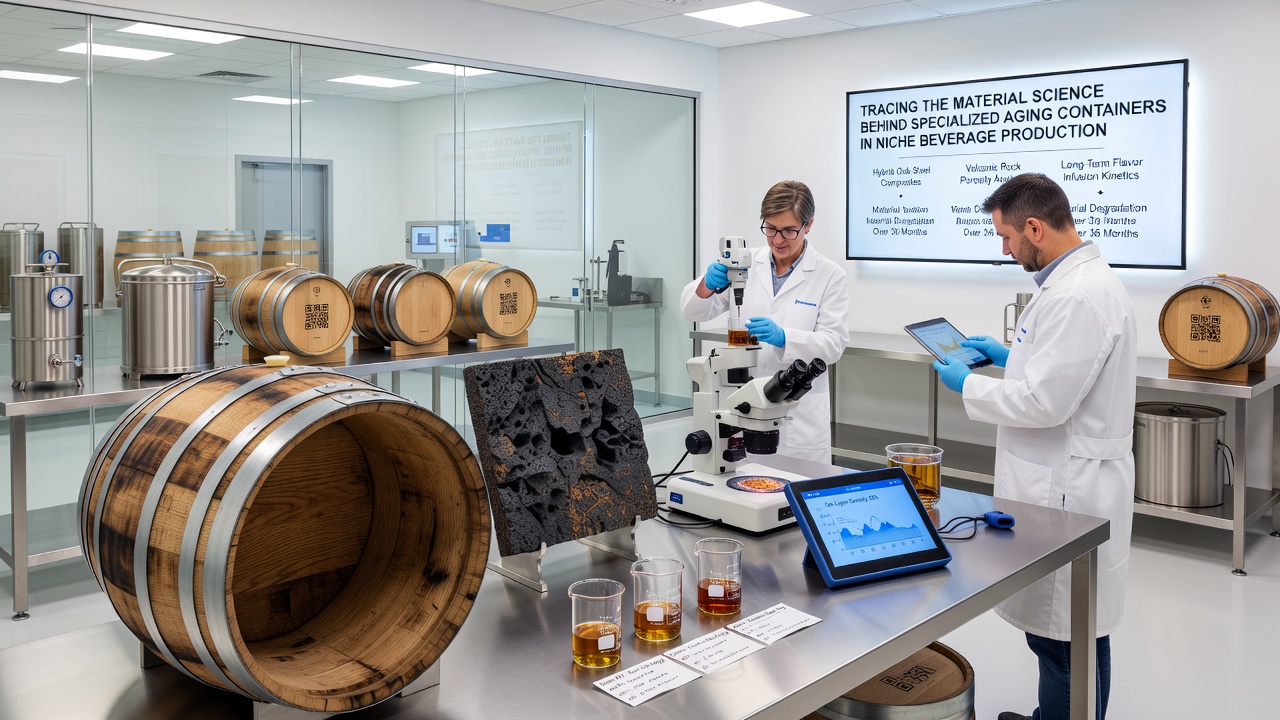
Engineered materials such as hybrid polymer-wood laminates and ceramic-lined vessels appear in experimental batches where surface treatments control both oxygen ingress and flavor migration and laboratory measurements indicate that certain fluoropolymer coatings reduce tannin adsorption while preserving volatile aroma compounds during long rests. Research teams at the Australian Wine Research Institute published findings in 2024 that quantified oxygen transmission rates through various liners and these figures help producers predict color stability and ester formation timelines for high-value products like barrel-aged gin or mead. In September 2026 several material science conferences scheduled updates on bio-based coatings derived from lignin byproducts that aim to improve sustainability metrics without altering sensory outcomes.
Glass-lined containers serve ultra-premium segments because the inert surface prevents any leaching and producers pair them with headspace management systems that introduce precise oxygen doses through sintered diffusers and analytical reports confirm that this approach yields reproducible results across batches where traditional wood variability might otherwise introduce inconsistencies. Those who examined electron microscopy images of aged beverage residues note distinct crystal formations on uncoated metal versus coated surfaces which underscores how surface chemistry dictates long-term stability.
Practical Measurement and Quality Control Methods
Producers rely on dissolved oxygen probes, gas chromatography-mass spectrometry, and Fourier-transform infrared spectroscopy to monitor container performance during aging cycles and these tools reveal how temperature fluctuations between 12 and 18 degrees Celsius alter diffusion kinetics across different substrates. Industry databases maintained by the Beverage Alcohol Council compile anonymized datasets that compare extraction curves for spirits aged in new versus used containers and such records guide decisions on whether to refresh wood or switch to inert systems for cost control.
Conclusion
Material science continues to expand the options available for niche beverage aging by quantifying oxygen permeability, compound migration, and structural durability across wood, metal, mineral, and coated systems. Producers apply these measurements to match container characteristics with desired chemical outcomes while regulatory frameworks from agencies in North America and Oceania ensure food-contact safety standards remain consistent. Ongoing laboratory work scheduled for release around September 2026 will likely refine predictive models that link container material data directly to shelf-life projections and flavor compound stability.