Devon Schröder · 27 October 2026
Seasonal Temperature Swings and Their Role in Modulating Extraction Dynamics Inside Custom Timber Vessels for Refined Spirit Development
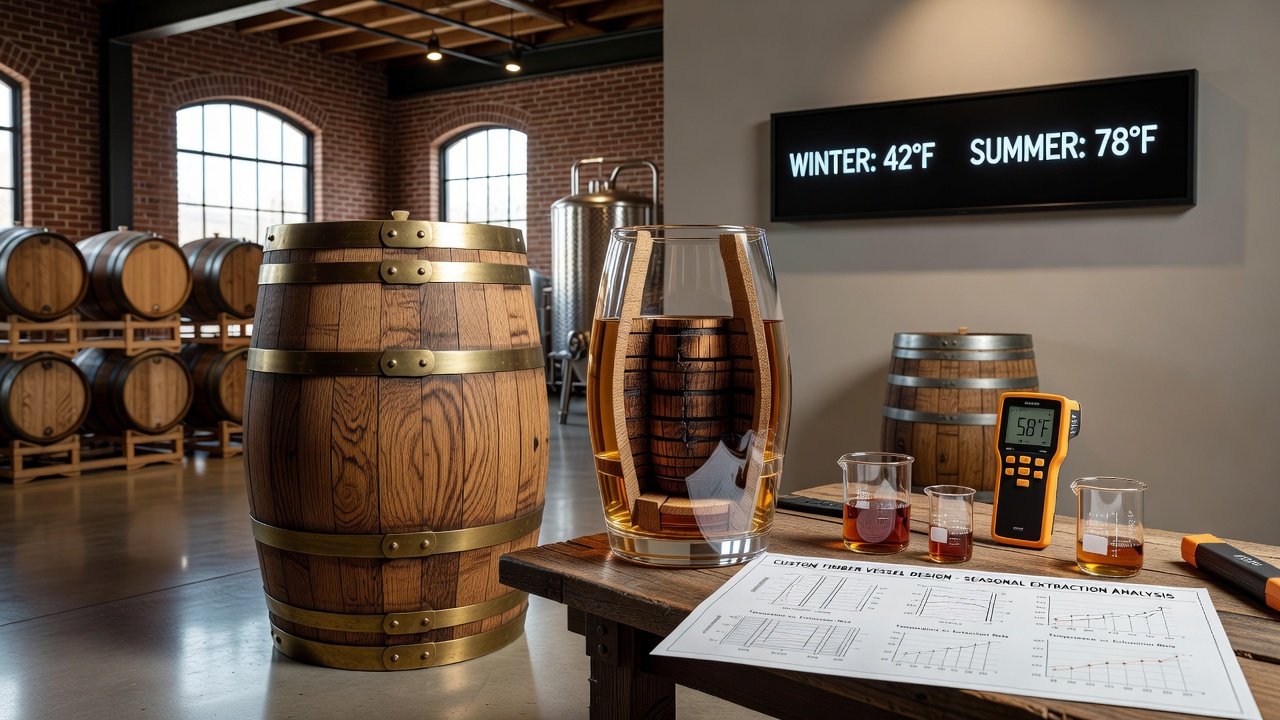
Seasonal temperature swings create measurable shifts in how compounds move between custom timber vessels and the refined spirits they contain, and researchers have documented these patterns across multiple production regions since the early 2000s. Wood cells in oak and other timber species expand during warmer periods while contracting when temperatures drop, which alters pore size and allows greater or lesser penetration by the liquid inside. The spirits themselves also respond to heat changes, since ethanol-water mixtures increase in volume as temperatures rise, pushing more liquid into the wood matrix and then drawing it back out during cooling phases.
How Temperature Cycles Affect Wood and Liquid Interaction
Observers note that daily and annual temperature fluctuations drive a repeated expansion-contraction cycle inside barrels and larger custom vessels, and this mechanical action influences the rate at which lignin breakdown products, hemicellulose fragments, and oak lactones enter the spirit. Data collected from instrumented barrels show that internal pressure can vary by several kilopascals over a 24-hour period when ambient temperatures swing more than 15 degrees Celsius, which forces liquid deeper into the stave wood during warm hours and then creates a partial vacuum effect as temperatures fall. Those who monitor extraction kinetics report that vanillin and syringaldehyde concentrations rise faster during extended warm spells, while cooler months slow the migration of these same molecules yet allow more time for certain tannins to polymerize before they dissolve.
Regional Climate Data and Vessel Performance
Production sites in different climate zones experience distinct swing amplitudes, and studies from North American and European cooperages indicate that barrels stored outdoors or in non-climate-controlled warehouses undergo greater seasonal modulation than those kept in insulated facilities. In October 2026, monitoring equipment installed at several North American distilleries recorded average daily temperature ranges of 12 to 18 degrees Celsius inside barrel storage barns, correlating with accelerated extraction of furanic compounds during the preceding summer months. The same datasets revealed that vessels fabricated from tighter-grained timber exhibited smaller pressure differentials during these swings, resulting in more gradual compound transfer compared with wider-grained staves exposed to identical conditions.
Custom timber vessels often incorporate variable toast levels and stave thicknesses chosen specifically to moderate these effects, and manufacturers adjust these parameters based on expected storage climates. Research conducted at multiple cooperages demonstrates that thicker staves dampen the amplitude of internal temperature changes, thereby extending the time required for a given level of extraction to occur. Conversely, thinner staves transmit temperature shifts more rapidly, which can produce sharper peaks in compound release during warm seasons followed by slower periods when temperatures decline.
Measurement Techniques and Observed Patterns
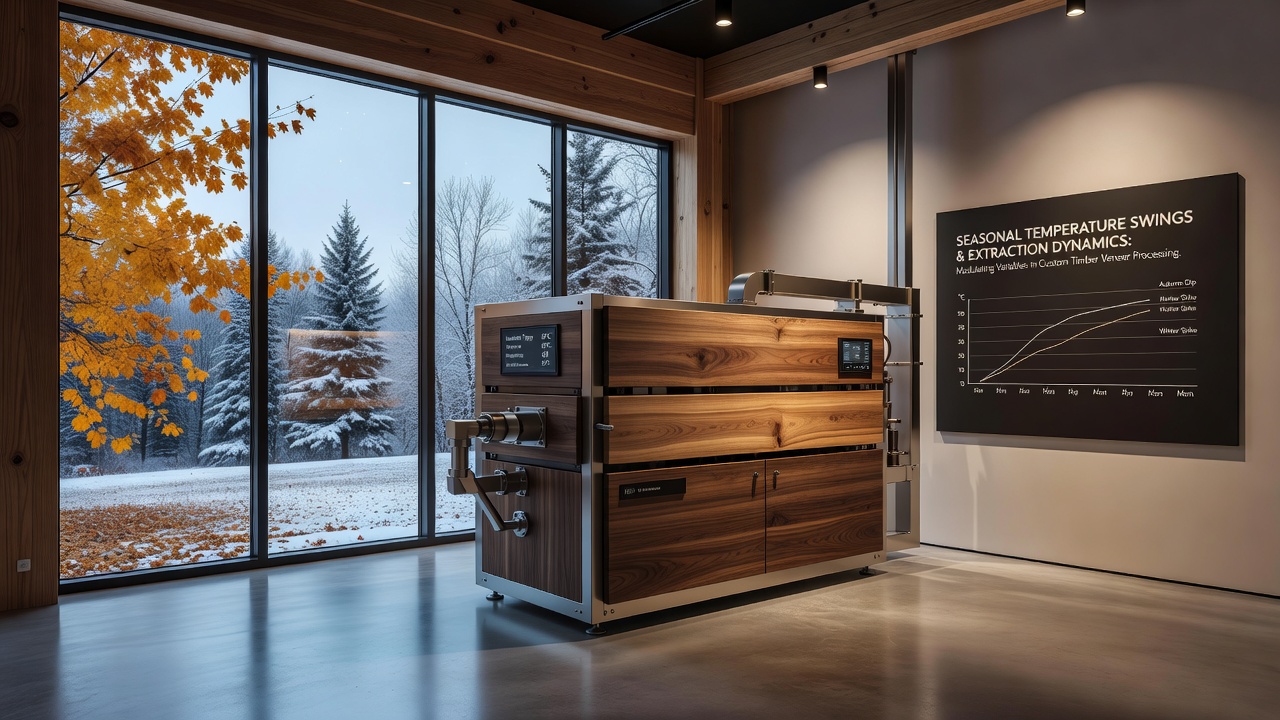
Analytical teams employ sensors embedded at different depths within staves to track both temperature gradients and liquid movement, and results consistently show that the outer 5 to 8 millimeters of wood experience the largest swings while deeper layers remain more stable. This gradient produces a layered extraction profile in which surface wood releases its extractives early in the aging cycle, after which inner layers contribute at rates governed by how far temperature-driven pressure changes propagate inward. Figures from long-term trials indicate that spirits aged through multiple full seasonal cycles accumulate distinct volatile profiles compared with those held under constant temperature, particularly in the concentrations of oak-derived aldehydes and lactones.
Industry reports compiled by organizations such as the Australian Wine Research Institute and cooperage associations in North America document that producers adjust warehouse ventilation schedules to moderate extreme swings, yet complete elimination of seasonal influence remains impractical for vessels stored in conventional facilities. The resulting modulation of extraction dynamics therefore becomes a controllable variable when vessel specifications and storage locations are selected together.
Conclusion
Seasonal temperature swings continue to shape extraction inside custom timber vessels through repeated mechanical and thermal interactions that alter wood porosity and liquid volume, and evidence from instrumented trials shows these effects produce measurable differences in final spirit composition. Producers who account for climate patterns when specifying vessel dimensions, wood selection, and storage conditions can influence the timing and extent of compound migration without altering the fundamental aging chemistry. Ongoing data collection at production sites worldwide supports the view that temperature-driven dynamics remain a central factor in refined spirit development across diverse production environments.