Devon Schröder · 29 September 2026
Exploring Heat Application Sequences During Barrel Fabrication and Resulting Volatile Compound Profiles in Aged Beverages
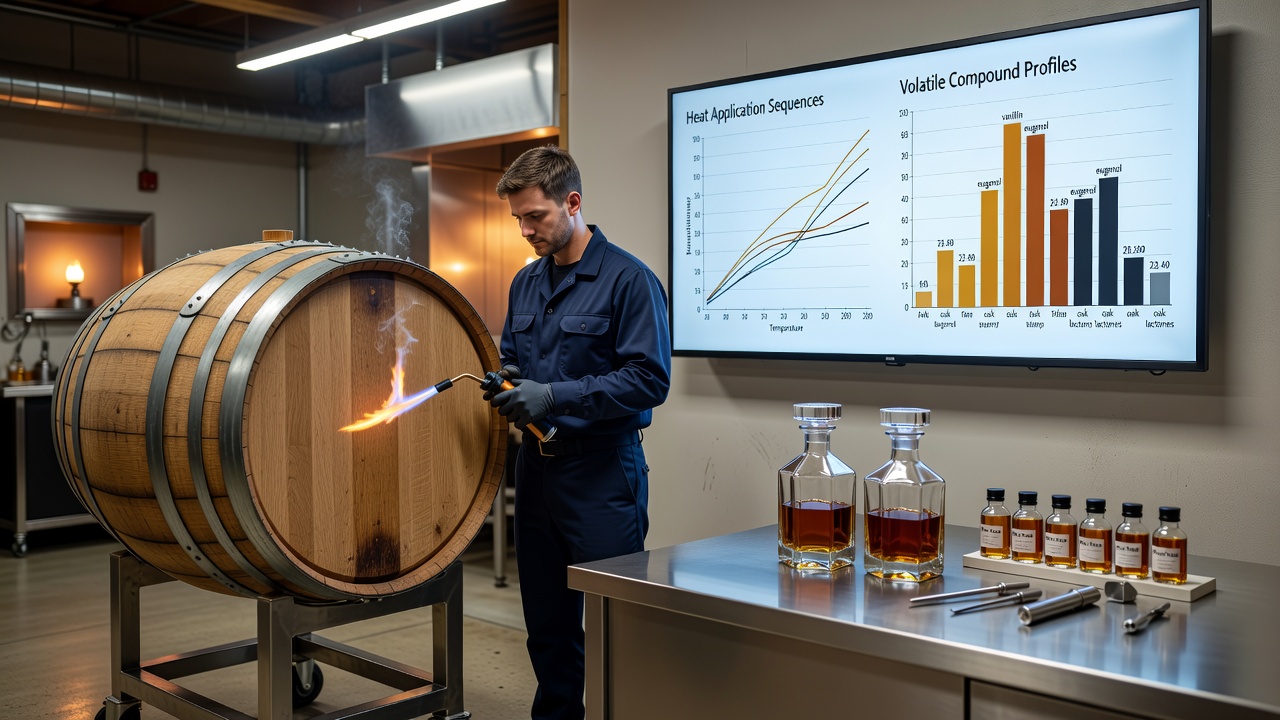
Barrel fabrication relies on precise heat application sequences that transform oak wood structure, and those sequences directly shape the volatile compounds extracted during beverage aging. Cooperages apply heat in staged steps that include initial warming, toasting phases at varying intensities, and final charring where required, while each stage alters lignin, cellulose, and hemicellulose breakdown in measurable ways.
Heat Application Sequences in Modern Cooperage
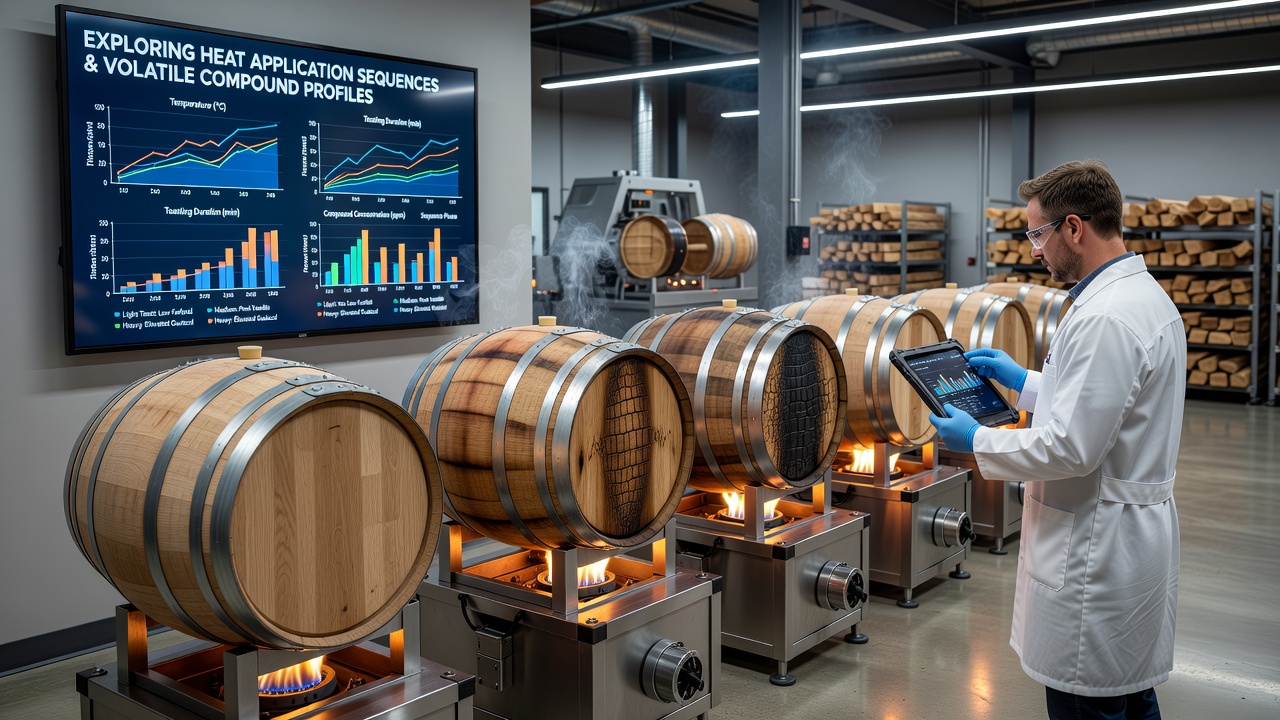
Traditional and industrial barrel makers follow documented protocols that start with steam bending of staves followed by controlled fire exposure inside the assembled barrel. Light toasting occurs at surface temperatures around 150 to 200 degrees Celsius for 10 to 20 minutes, medium toasting reaches 200 to 250 degrees Celsius, and heavy charring exceeds 250 degrees Celsius for brief periods. Researchers have mapped these sequences using infrared sensors and gas chromatography to record exact compound formation at each temperature threshold.
Data from cooperage operations show that slower ramp rates during toasting preserve more oak lactones, whereas rapid high-heat charring increases furfural and 5-methylfurfural concentrations. Observers note that barrel size influences heat penetration, with smaller casks requiring shorter exposure times to achieve equivalent inner-surface modification compared to standard 225-liter wine barrels.
Volatile Compound Formation and Beverage Interaction
Volatile compounds released from toasted or charred oak include vanillin, eugenol, guaiacol, and various phenolic aldehydes. Studies conducted at research facilities indicate that vanillin levels rise steadily with medium toast levels, while syringaldehyde and coniferaldehyde appear in higher concentrations after charring sequences. These molecules migrate into the beverage over months or years, and their profiles change further through oxidation and esterification reactions inside the barrel.
According to measurements reported by beverage laboratories, whiskey aged in heavily charred barrels contains elevated levels of 4-methylguaiacol and 4-ethylguaiacol compared to wine aged in lightly toasted casks. The same research tracks how seasonal temperature fluctuations accelerate or slow extraction rates, producing different final concentrations depending on warehouse location and storage duration.
September 2026 updates from the Alcohol and Tobacco Tax and Trade Bureau include revised guidelines on barrel reuse that reference updated volatile profiling methods. Those guidelines encourage producers to document heat sequences for traceability, and they align with parallel standards issued by regulatory bodies in Canada and Australia. Industry reports confirm that barrels fabricated with documented multi-stage toasting now carry certification markers used by distillers and winemakers seeking consistent compound delivery.
Analytical Methods and Industry Data
Gas chromatography-mass spectrometry remains the primary tool for mapping volatile profiles, yet newer portable sensors allow cooperages to perform real-time checks during fabrication. Figures released by the Australian Wine Research Institute reveal that barrels toasted at 220 degrees Celsius for 15 minutes yield 30 percent higher cis-oak lactone content than those processed at lower temperatures for longer durations. European cooperage associations have published parallel datasets covering Quercus robur and Quercus petraea species under identical heat sequences.
Producers adjust sequences based on the target beverage category. Bourbon specifications often require heavy charring to generate specific smoky and sweet notes, while many European wine producers specify lighter toasting to maintain fruit-forward character. One documented case showed that alternating heat pulses rather than continuous exposure reduced unwanted smoky compounds while preserving desirable vanilla notes in a single barrel batch.
Conclusion
Heat application sequences during barrel fabrication determine the exact volatile compound profile available for extraction, and analytical data continue to refine how those sequences are controlled. Regulatory updates expected through 2026 will likely standardize documentation practices across regions, while ongoing research tracks how small changes in temperature ramp rates and exposure times alter final beverage chemistry. The relationship between fabrication parameters and aging outcomes rests on measurable wood chemistry rather than variable interpretation.