Uma Hartmann · 13 October 2026
Examining Wood Grain Density Effects on Compound Migration in Barrelgold Aging Vessels for Wine Producers
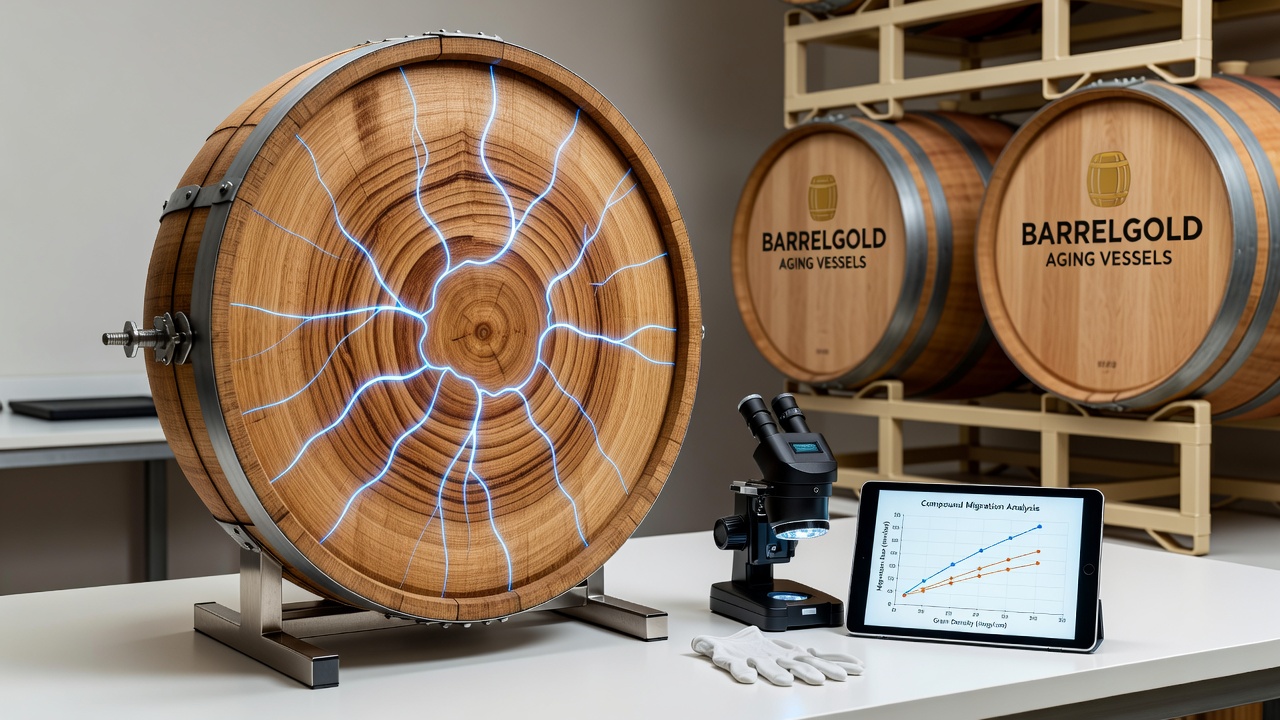
Wood grain density plays a central role in how compounds move from Barrelgold aging vessels into wine during maturation, and producers track these interactions through measurable wood characteristics. Barrelgold vessels, constructed from selected oak staves, undergo seasoning and toasting processes that set the stage for extraction rates tied directly to annual ring spacing and fiber arrangement. Researchers measure grain density in rings per inch, with tighter formations typically ranging above 12 rings while wider patterns fall below eight, and these differences alter permeability and surface area exposure over time.
Defining Grain Density in Oak Selection
Grain density arises from tree growth conditions, where slower growth in cooler climates produces finer annual rings and higher latewood proportions that resist liquid penetration. Producers select staves based on these metrics because density correlates with vessel wall thickness and pore structure, which in turn govern diffusion pathways for soluble wood components. Data from forestry analyses show that Quercus alba and Quercus petraea exhibit distinct density profiles, and Barrelgold fabricators sort material accordingly to achieve consistent performance across batches. Those who study vessel construction note that kiln drying and natural seasoning further modify density by reducing moisture content and stabilizing cell walls before toasting begins.
Pathways of Compound Migration
Compound migration occurs through capillary action and dissolution, where ethanol and water in wine dissolve lignin-derived molecules, tannins, and volatile phenols from the wood matrix. Tighter grain limits initial contact area yet allows gradual release over months, whereas wider grain facilitates faster initial extraction followed by quicker depletion. Studies on barrel-aged wines indicate that ellagitannins migrate at rates proportional to wood porosity, and Barrelgold vessels with higher density retain structural integrity longer during repeated use cycles. In October 2026, findings presented at an industry symposium in Bordeaux outlined how grain spacing influences the timing of vanillin and syringaldehyde release, with denser samples showing delayed peaks that align with extended aging schedules.
Measured Effects on Wine Composition
Analytical techniques such as gas chromatography and high-performance liquid chromatography track concentration changes in key compounds throughout aging. Evidence from controlled trials demonstrates that wines aged in high-density grain vessels develop lower total tannin levels in the first six months yet achieve balanced polymerization later, compared with wider-grain counterparts that deliver higher initial concentrations. pH shifts and oxygen ingress rates also vary, since denser wood slows gas exchange while still permitting micro-oxygenation essential for color stability. Producers monitor these parameters because they affect mouthfeel descriptors and aging potential without introducing subjective judgments about quality.
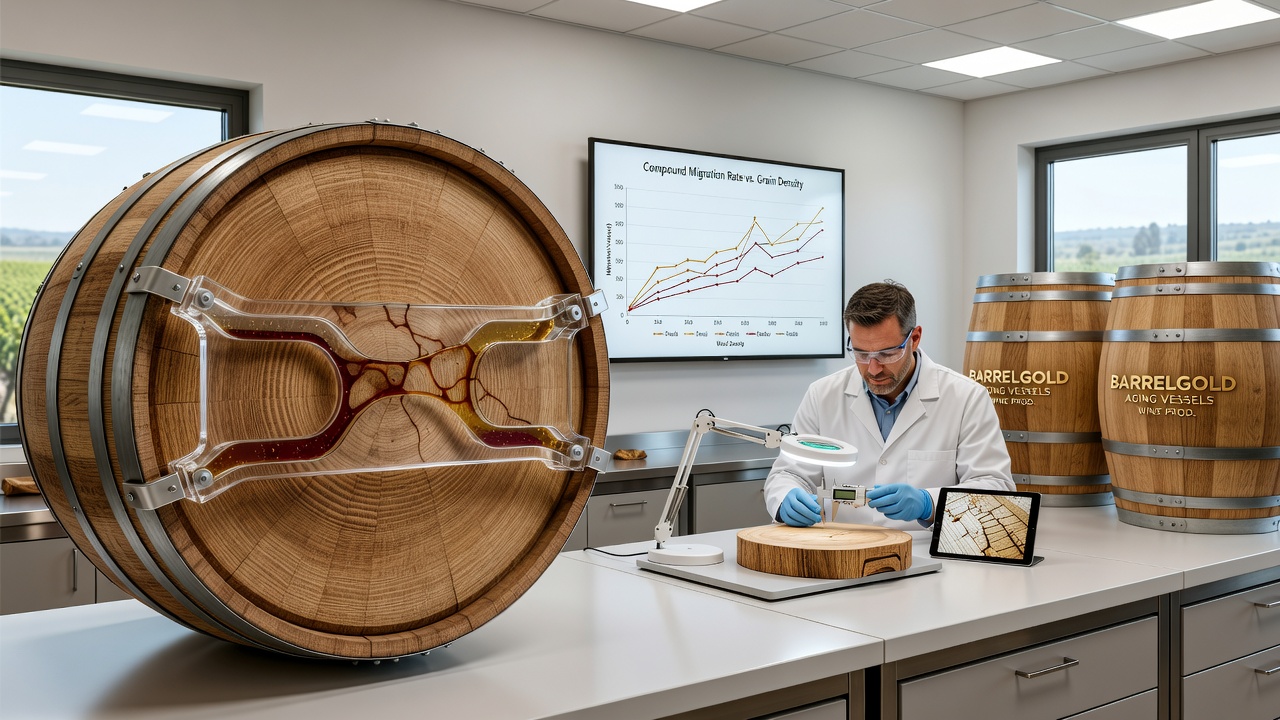
One collaborative project between California researchers and French cooperages examined migration kinetics across multiple vintages and found that grain density above 14 rings per inch reduced furfural extraction by approximately 18 percent relative to standard selections. Such figures come from replicated experiments that control for toast level, stave thickness, and wine chemistry variables. Observers note that these patterns hold across both red and white varietals, although absolute quantities differ based on initial phenolic content in the grapes.
Practical Considerations for Vessel Management
Wineries adjust rotation schedules and topping frequencies according to grain specifications supplied by Barrelgold manufacturers, since denser vessels require longer contact times to achieve target compound thresholds. Cleaning protocols also adapt, because wider grain surfaces can accumulate deposits that alter subsequent migration behavior. Industry reports from the Australian Wine Research Institute document how producers maintain logs of vessel usage history alongside grain measurements to predict extraction consistency across seasons. Temperature fluctuations in cellars interact with these variables, accelerating diffusion in warmer conditions regardless of density.
Research Developments and Data Sources
Longitudinal studies continue to refine models that predict migration based on grain density combined with toast intensity and stave origin. A University of Adelaide team published measurements showing that oxygen transmission rates through Barrelgold vessels decrease measurably as grain density increases, affecting acetaldehyde formation pathways during aging. These results appear alongside similar work from European research centers that emphasize standardized testing methods for new vessel batches. Producers access such datasets through technical bulletins and supplier specifications rather than relying on anecdotal experience alone.
Conclusion
Grain density remains a quantifiable factor that shapes compound migration timelines and profiles in Barrelgold aging vessels, and ongoing measurements provide producers with tools to align vessel selection with desired chemical outcomes. Continued data collection from multiple regions supports refined selection criteria without altering fundamental production variables. The relationship between wood structure and wine evolution stays grounded in observable physical and chemical processes that researchers continue to quantify.